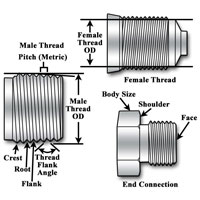
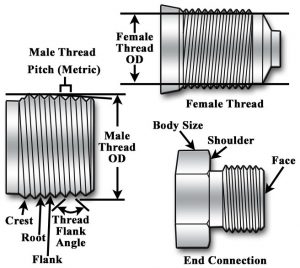
Threaded connections are often referred to as a process connection type. For Dwyer product specifications, this connection type is typically NPT (National Pipe Thread), which is an American standard thread. These connections allow products to be installed directly into piping or with the use of threaded fittings.
For threaded connections there are two common types, (1) straight or parallel thread and (2) tapered thread. Continue reading “U.S. and International Threaded Connection Standards”
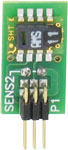
 Humidity sensors are one of the most common types of sensors used for HVAC equipment and building management systems. With proper humidity monitoring, energy efficiency of a building can be improved. By using environmental conditions in conjunction with an economizer to reduce the building load, cool outside air is used to cool the indoor space of a building. Dampers, humidity sensors, and temperature sensors are used to verify optimal outdoor conditions for maximizing energy cost savings.
 In today’s industry, the number of device output signals continues to grow. Each signal is different; so how do you figure out which one is right for your application? The easiest way to hone-in on the correct signals for your application is to decide whether you want a digital communication signal or an analog signal.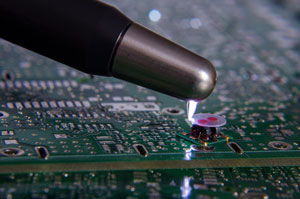
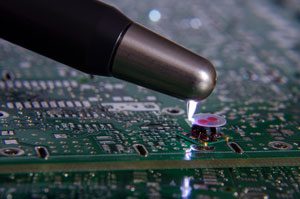 At one point or another we have all been exposed to some form of an electrostatic discharge (ESD) event, even something as simple as walking across a carpeted space, touching a door knob, and receiving an unexpected jolt. These types of events are very common in instrumentation applications. Today we will discuss what ESD is, the effects it has on instrumentation, and the steps that