Are you having problems with your current lift station level controls? Dwyer Instruments may just have the cost effective solution you need. In this article we will review several level sensing strategies, the advantages and disadvantages of each, as well as an option you may want to consider for your next project.
Lift Station Basics
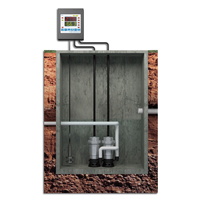 In an ideal gravity fed wastewater collection system, sewage would flow downhill from its point of origin in residential or commercial areas to its final treatment plant destination. Due to a number of factors including total distance, topography, geology, economics, etc., the ideal piping design is not always feasible. Therefore, in most cases, sewage flows downhill to a lift station where it collects and then is pumped to a higher elevation in order to begin its downhill journey again. Continue reading “Lift Station Level Sensing”
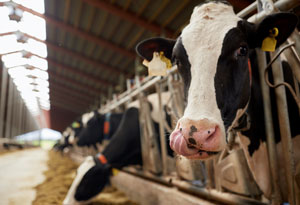
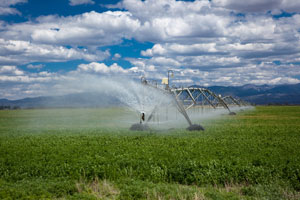
 Irrigation is fundamental to the production of food all over the world. Most of us have seen the large center pivot systems used on many farms today, and there are a number of other technologies that are designed to deliver water to crops to allow them to flourish. Less prominent, however, are the systems that collect and deliver water to these irrigation systems to allow for crop growth.
 Electrostatic discharge (ESD) is a unique phenomenon that can be seen in everyday life. The effects of ESD can be seen by rubbing a balloon on your head, resulting in your hair sticking to the balloon, or by touching a doorknob or a pet in a dry building and receiving a static shock.