
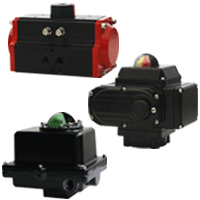
The W.E. Anderson Series ACT Actuators are available in either pneumatic or electric models. The wide range of torques and voltages means there is an actuator for almost any application. The standard ISO 5211 mounting configuration makes installation to any valve or damper quick and simple. W.E. Anderson pneumatic ACT models are a compact rack-and-pinion design with a symmetrical structure that ensures fast and steady action, high precision, and high output power. The corrosion-resistant anodized aluminum body is designed to withstand harsh, abusive industrial environments and provide reliable service. We offer double acting and spring return models in a variety of sizes to fit any application. Continue reading “[Product Highlight] Series ACT Pneumatic and Electric Actuators”

 What comes to mind when you think of the phrase “energy efficient?” Perhaps you think of LED light bulbs, electric cars, Energy Star appliances, or LEED-certified buildings. But energy efficiency isn’t limited to “green” products or certifications.
 Electrostatic discharge (ESD) is a unique phenomenon that can be seen in everyday life. The effects of ESD can be seen by rubbing a balloon on your head, resulting in your hair sticking to the balloon, or by touching a doorknob or a pet in a dry building and receiving a static shock.

 Picture this: You’re driving on the highway and push your car’s speed to the limit. Suddenly, a police officer pulls up behind you. Your heart races and stomach drops. You hold your breath as your eyes quickly dash to your car’s speedometer, double-checking your speed. Luckily, you aren’t going over the speed limit. Just as the butterflies in your stomach start to settle, red and blue lights start flashing behind you. You slow the car and come to a stop. The officer tells you that you were going far faster than you thought that you were. Turns out, your speedometer is out of calibration. Now, not only are you running late, but you also owe the state a couple hundred dollars.