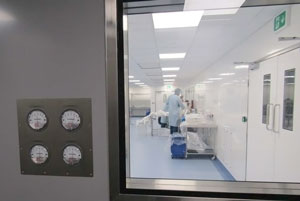
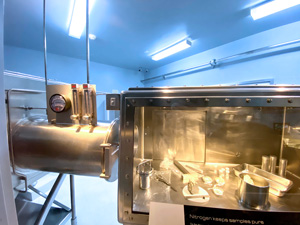
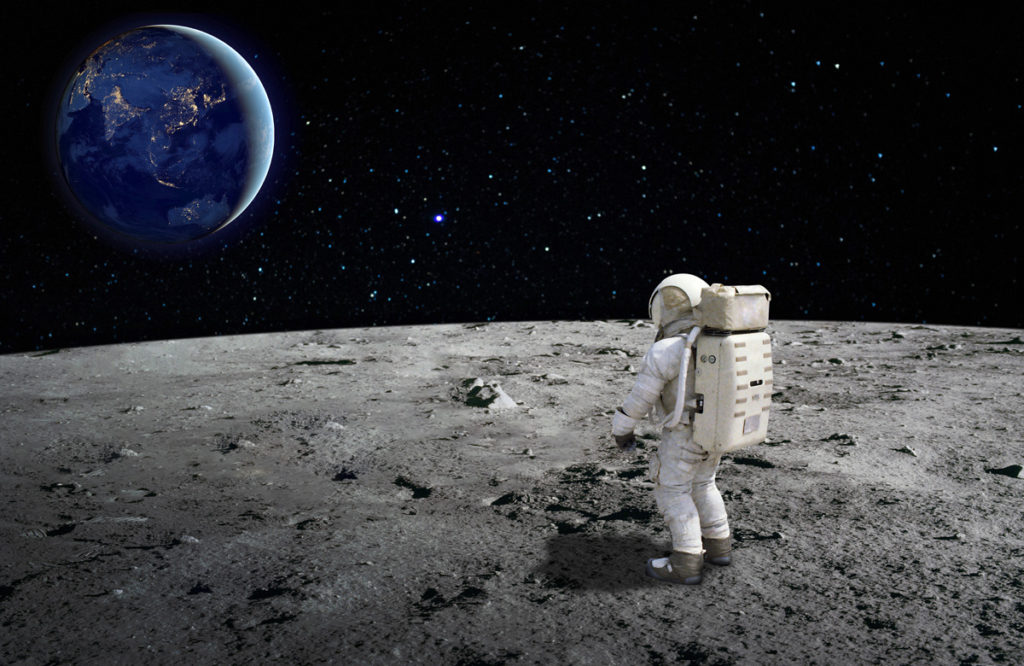
For as long as humanity has been looking up at the sky, we’ve wondered what lay beyond the ground beneath our feet. When the astronauts of the Apollo 11 mission took their first steps in 1969, the world saw a future filled with spaceships and rockets. We dreamed of a lack of gravity, fueled by grainy images on a TV and the words of Neil Armstrong: “That’s one small step for a man, one giant leap for mankind.” The Apollo 17 mission in 1972 was the last trip to the moon for several decades.
Lunar science has become a thriving field of study which helps to define our knowledge of the formation of the universe. The lunar rock and soil samples gathered by Apollo astronauts are still studied to this day.
 Continue reading “Protecting Lunar Samples from Contamination”
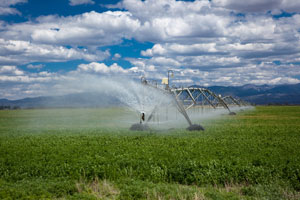
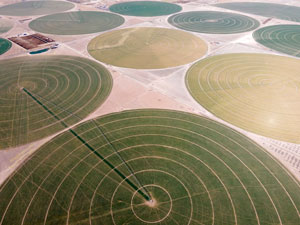 You arrive at a large field, small sprouts peeking out of the soil. At the center of the field lies a structure connected to a span of pipe from which sprinklers hang. Trusses brace and support its weight. From the air, this field would appear to be a perfectly circular patch of green.
 In this age of virtual meetings and online connections, to “Google” something has become synonymous with quickly looking up information. For some, bookshelves are more for decor than they are functional, and trends are leading to becoming more environmentally-friendly and saving paper. Print media is not necessarily “dead,” but it is becoming much less prevalent as we journey forward in this digital age.